

Majestic View Nature Center
Arvada, Colorado
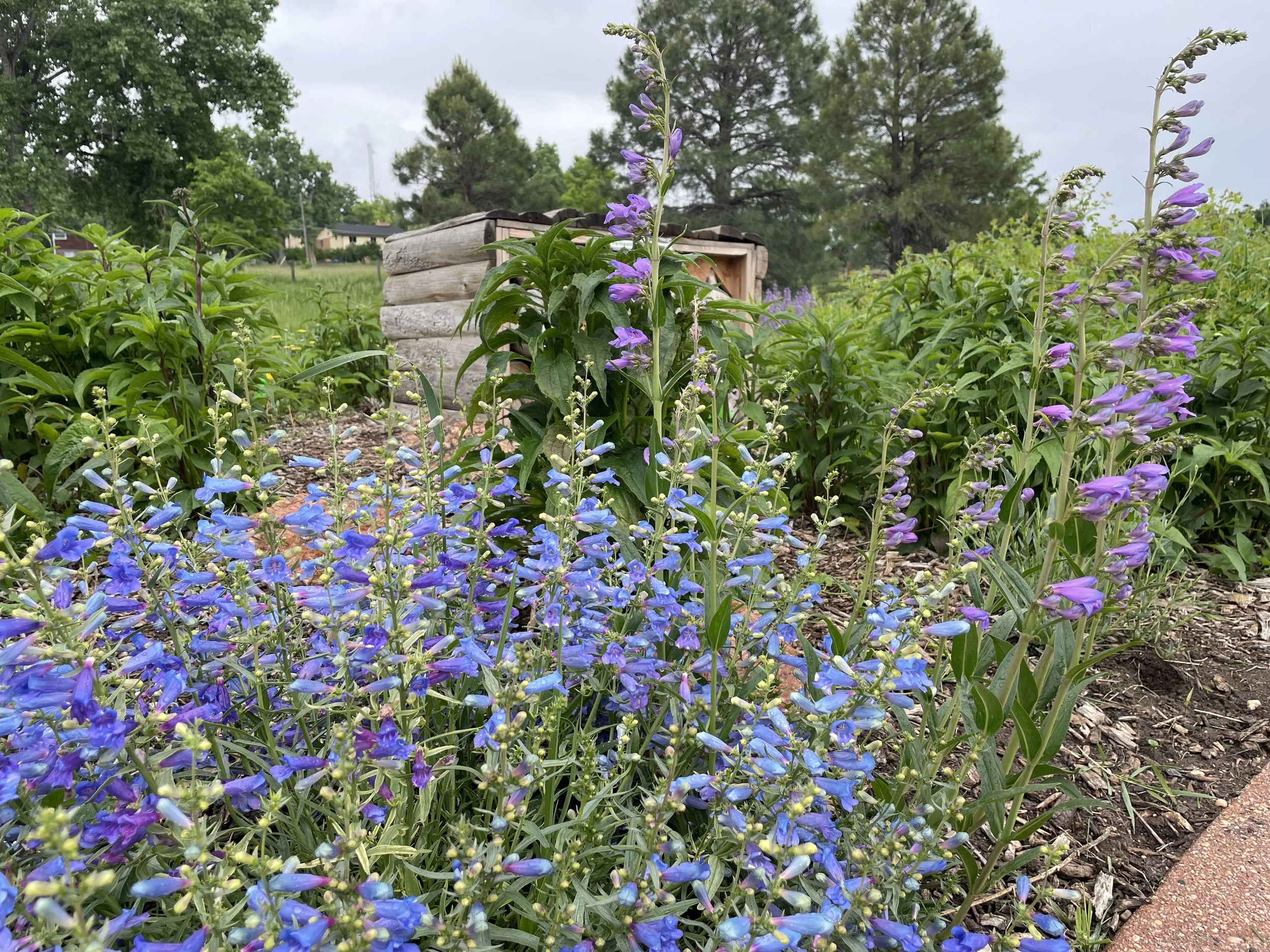
It’s nearly a content hum of bees. Hummingbirds dive in to get a sip.
Majestic View Nature Center Demonstration Gardens requires hundreds of volunteer hours every year as the City of Arvada’s ecology education center has begun to embrace major steps toward conservation. Terra began volunteering in 2020 and is one of the founding members of Friends of Majestic View.
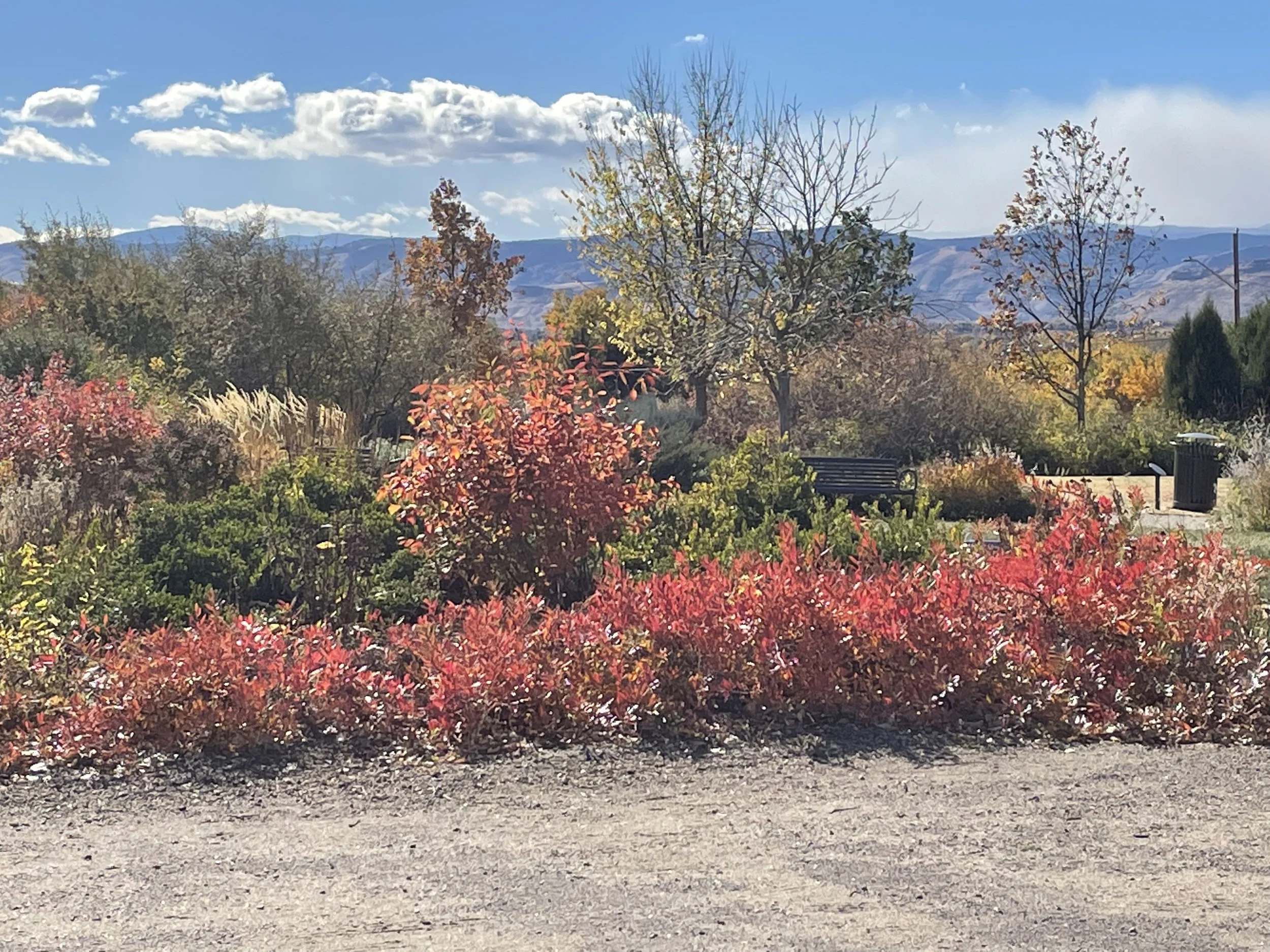
It is a "majestic view" no matter what time of year, but the gardens show off their fall colors in October. The brightest is the "Pawnee Buttes" sand cherry in the front.
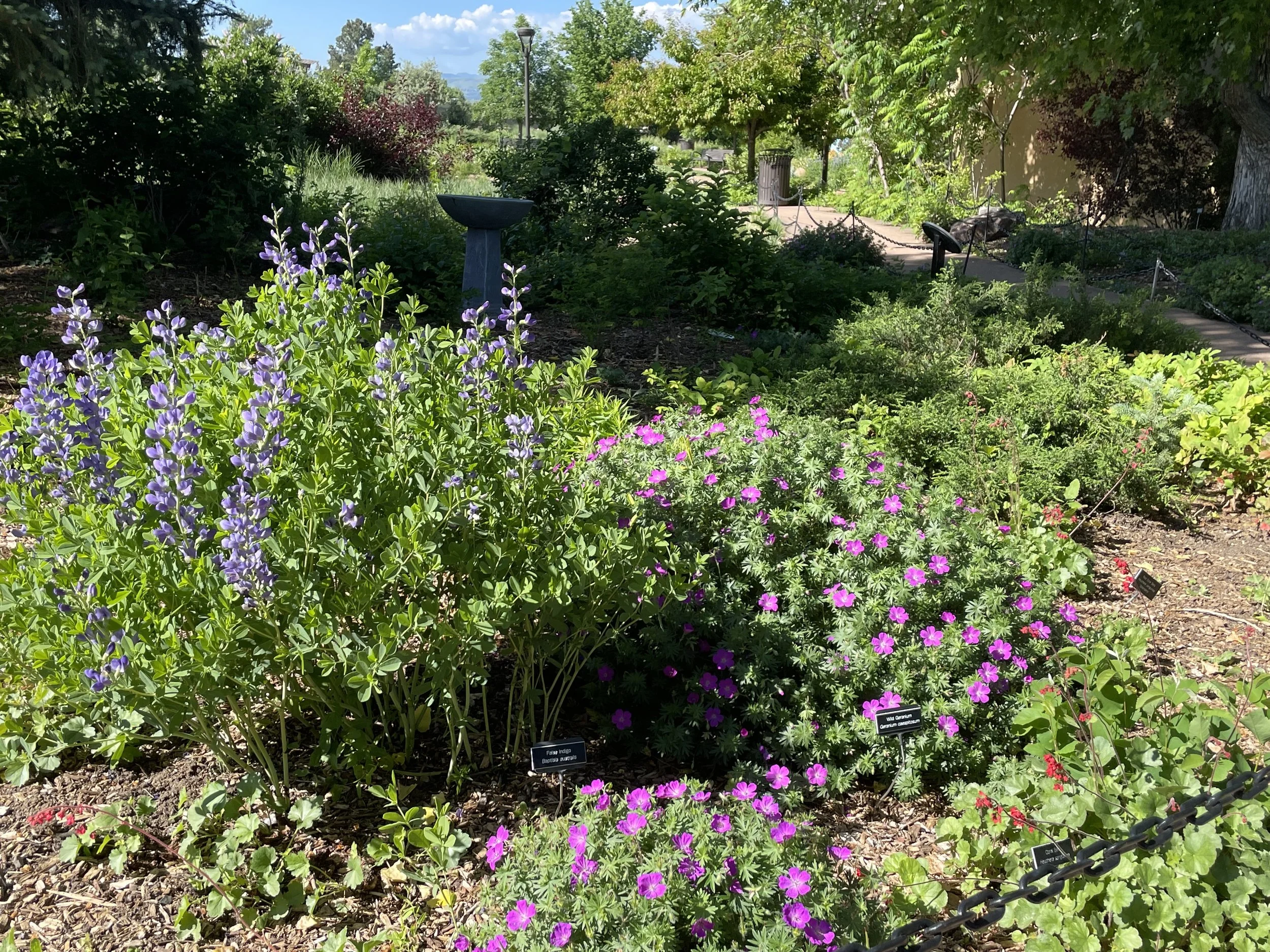
False indigo and wild geranium grace the entrance, facing the south.
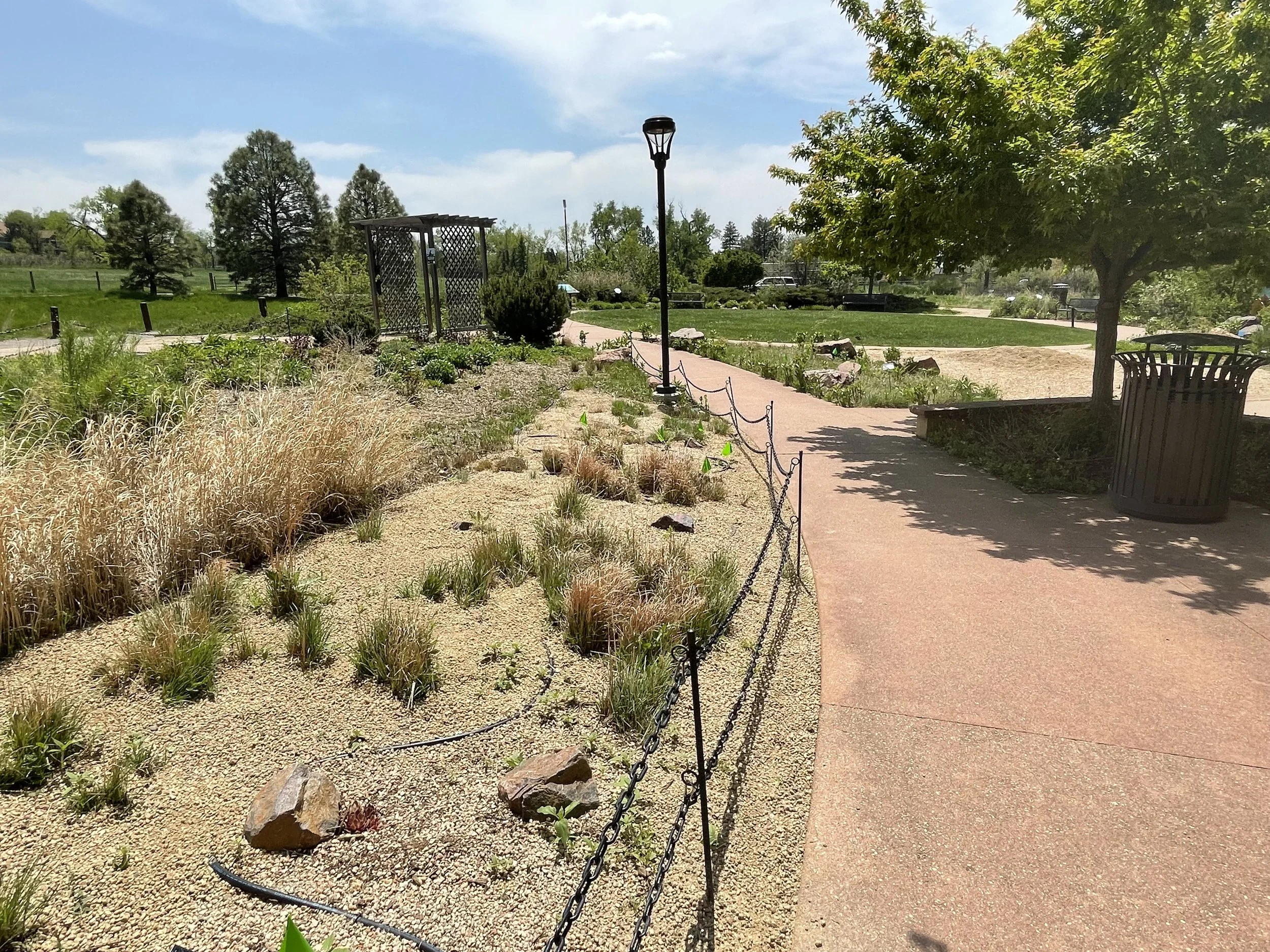
The first year of the montane rock garden. The irrigation lines still needed to be covered completely with gravel mulch
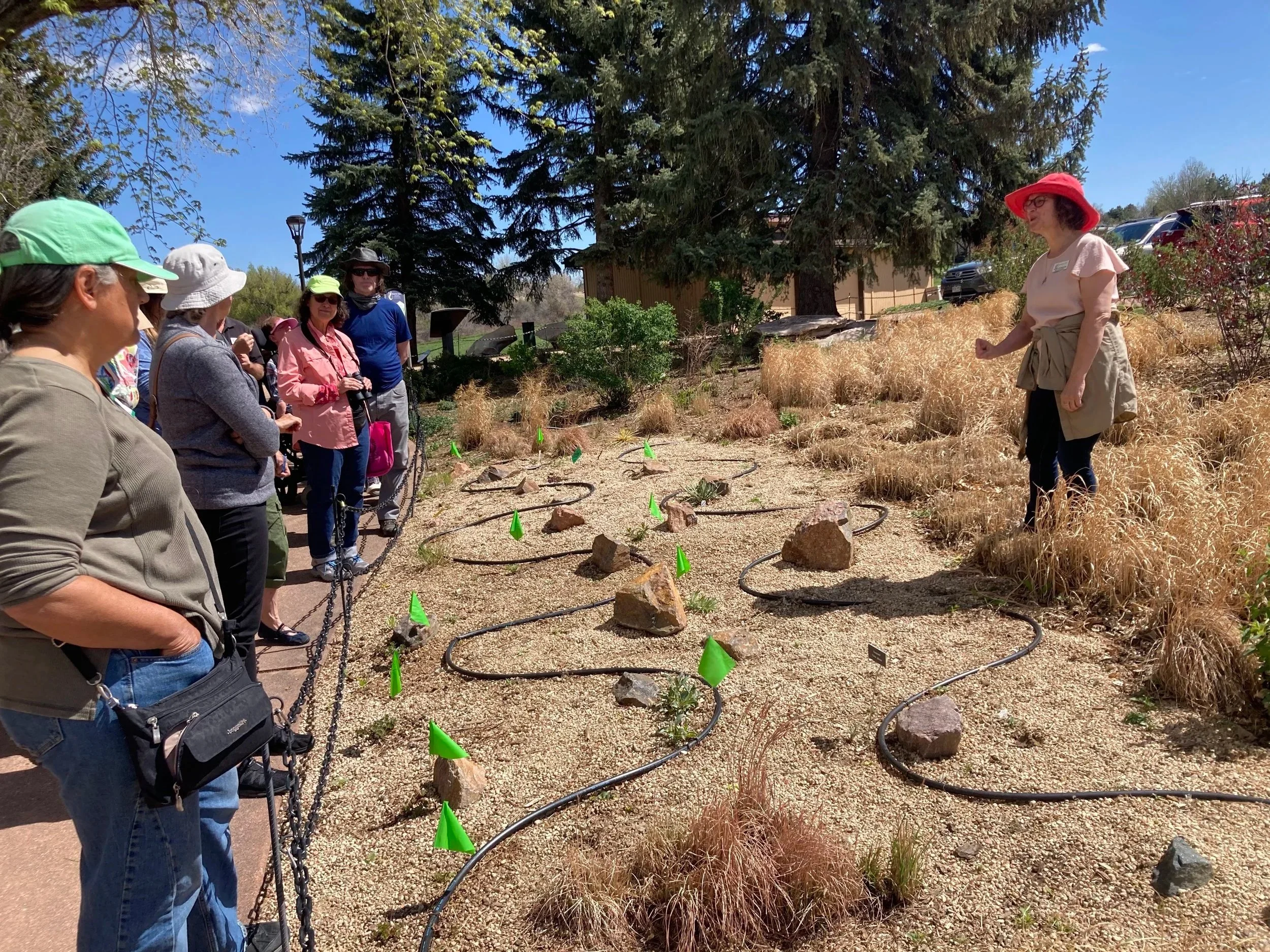
Terra gives a talk to the Wild Ones, stopping at the new installation of the Colorado succulent and natives garden.
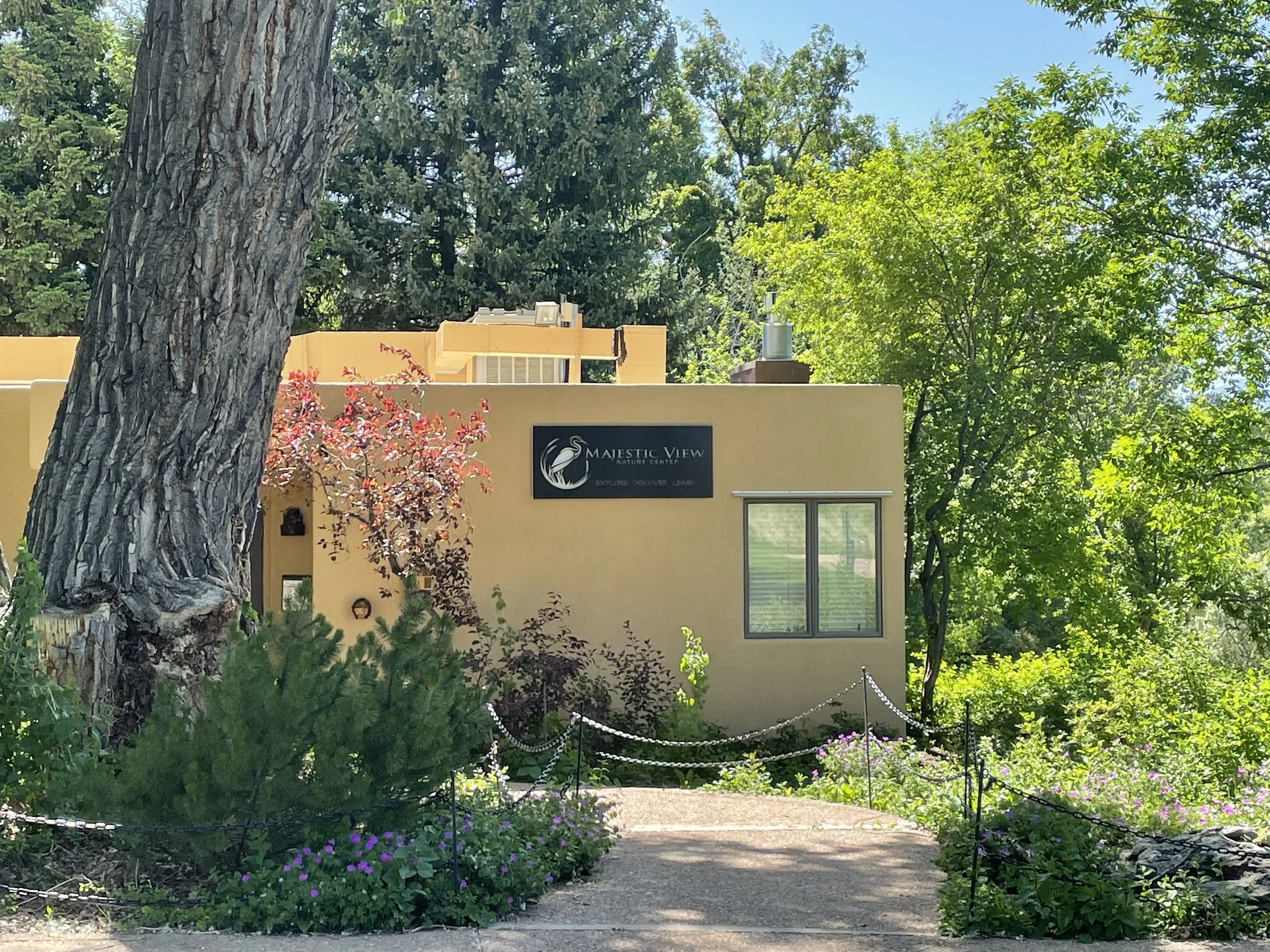
The entrance to the Nature Center is obscured by a huge cottonwood trunk, making it tricky for visitors to find the front door. When I arrived volunteers were charged with getting invasive buckthorn trees out. (to the right of window) It proved nearly impossible.
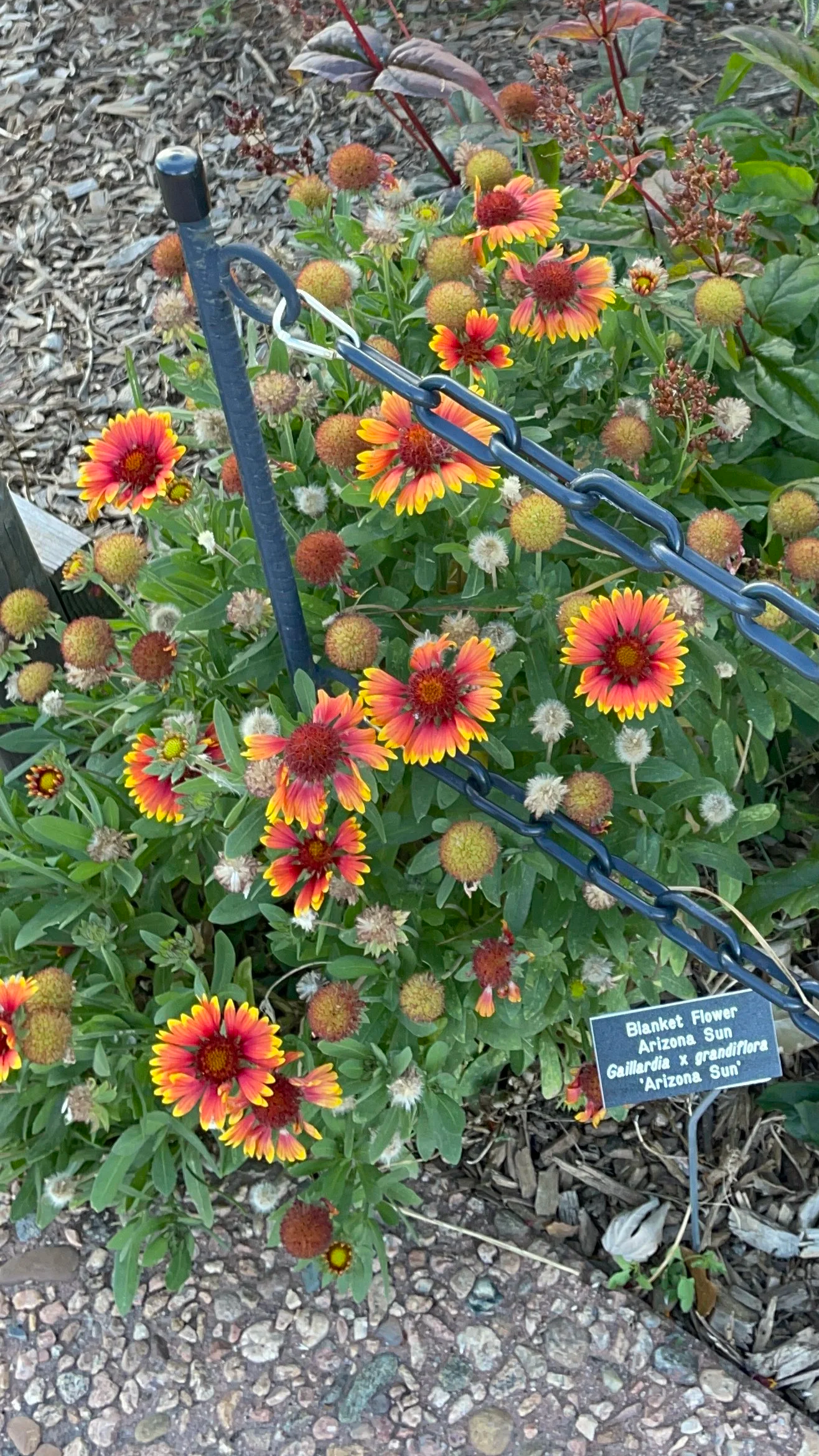
Gaillardia, or blanket flower, can be grown to mass profusion like this. In itss natural habitat, you're more likely to find only one or two stems.
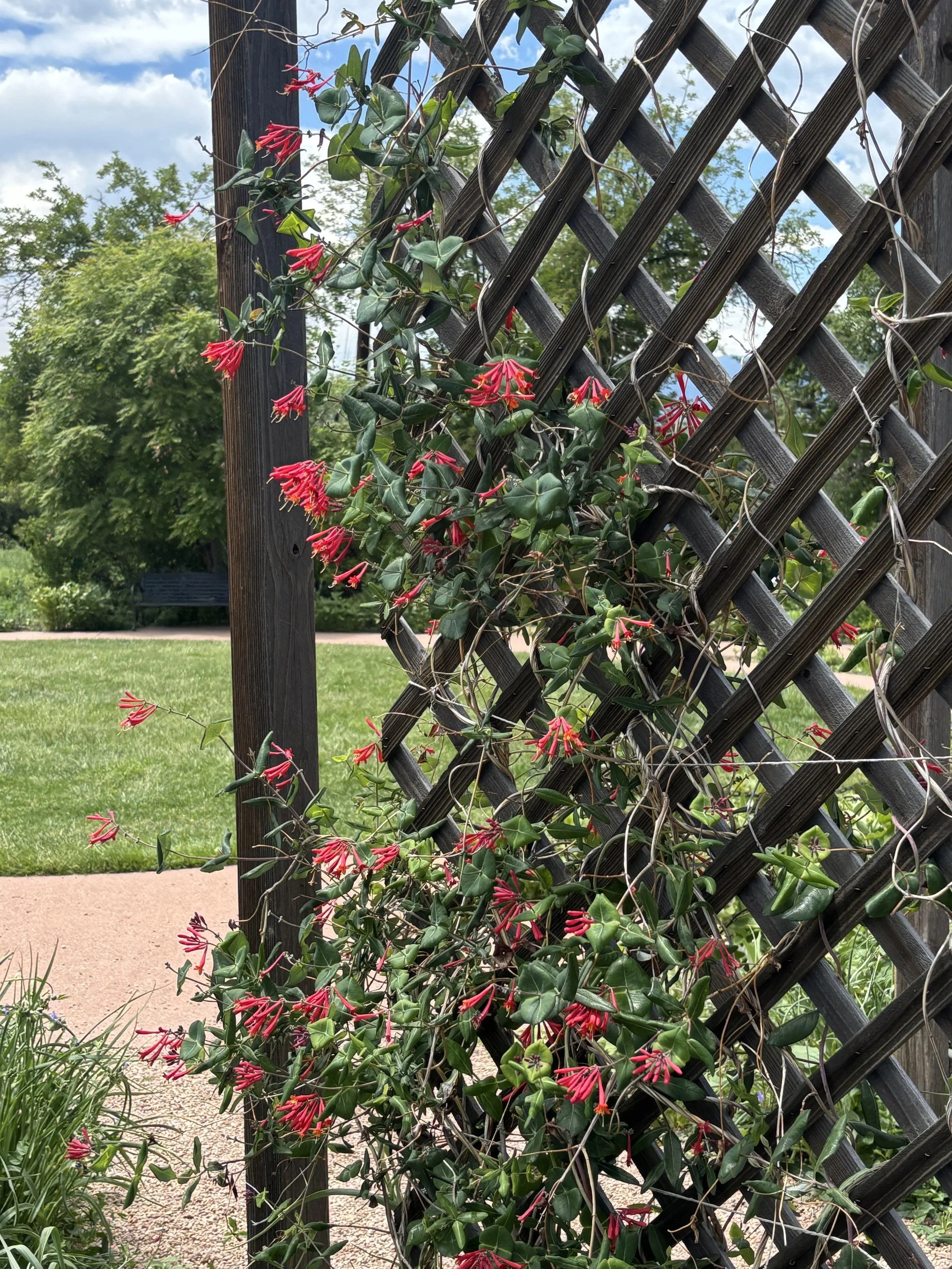
This was only the second year this lonicera sempivirens exploded with red. This particular honeysuckle was a hummingbird magnet.
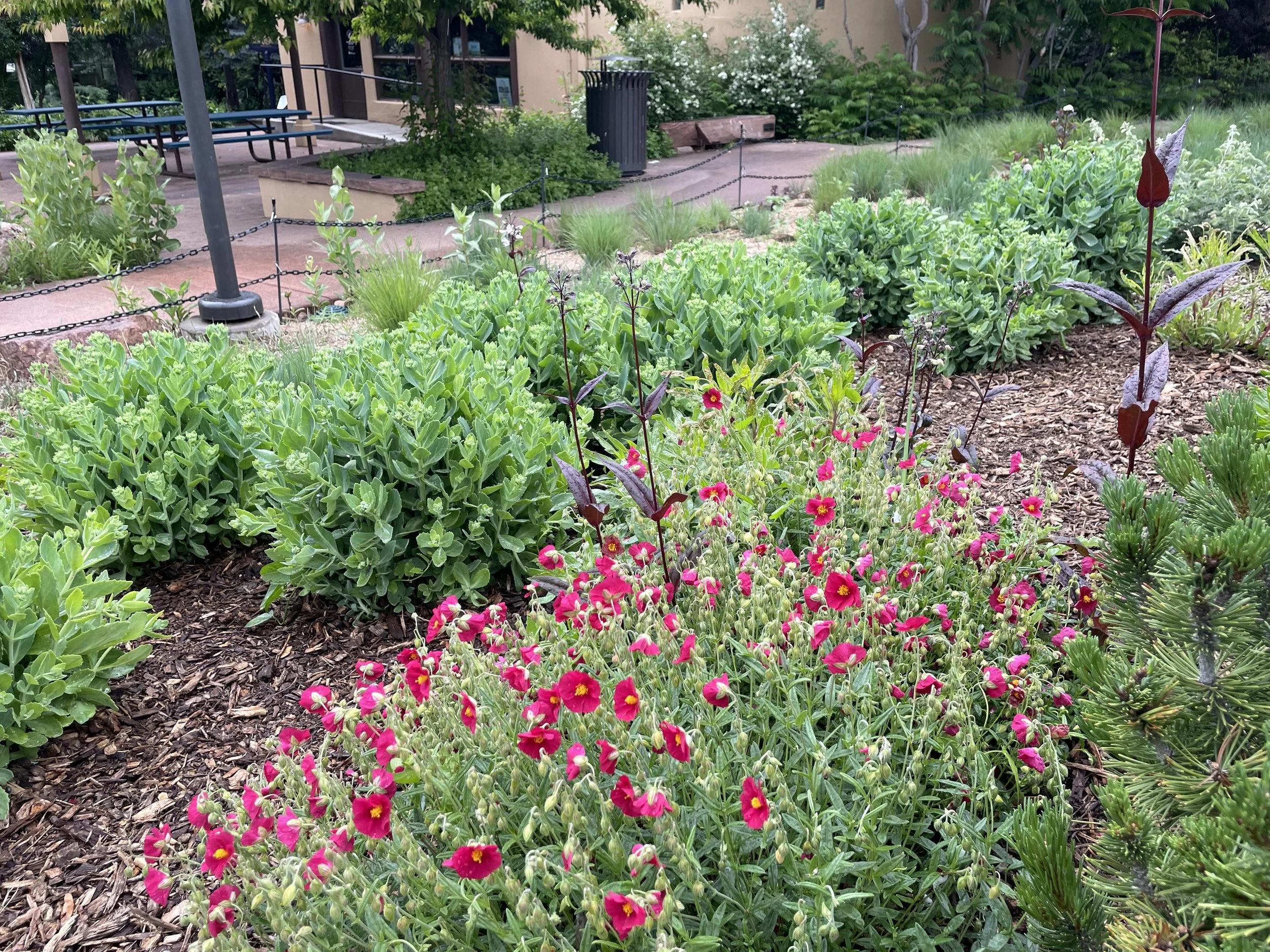
This "rock rose" (helianthemum nummmularium) wasn't something I was used to using in Santa Fe gardens, but where there's enough water, this was a stunner when not much else was showing off.
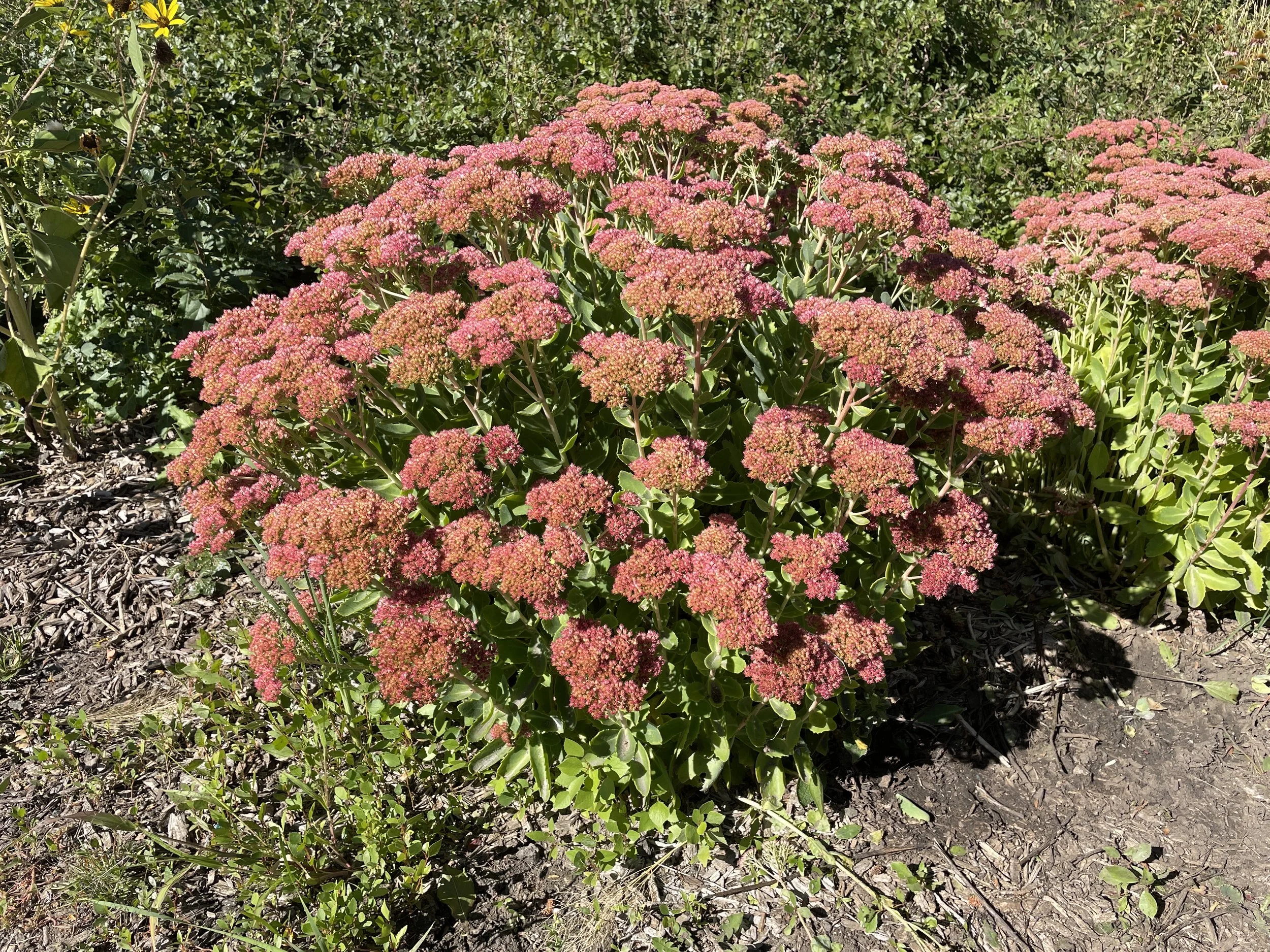
Perhapse another year I'll get a better image of this 'Autumn Joy' sedum (Hylotelephium). It was a bit overwatered, so the color just didn't show off. Sedums, succulents and penstemons hate their roots soaking, so keep that in mind when locating them in the garden.
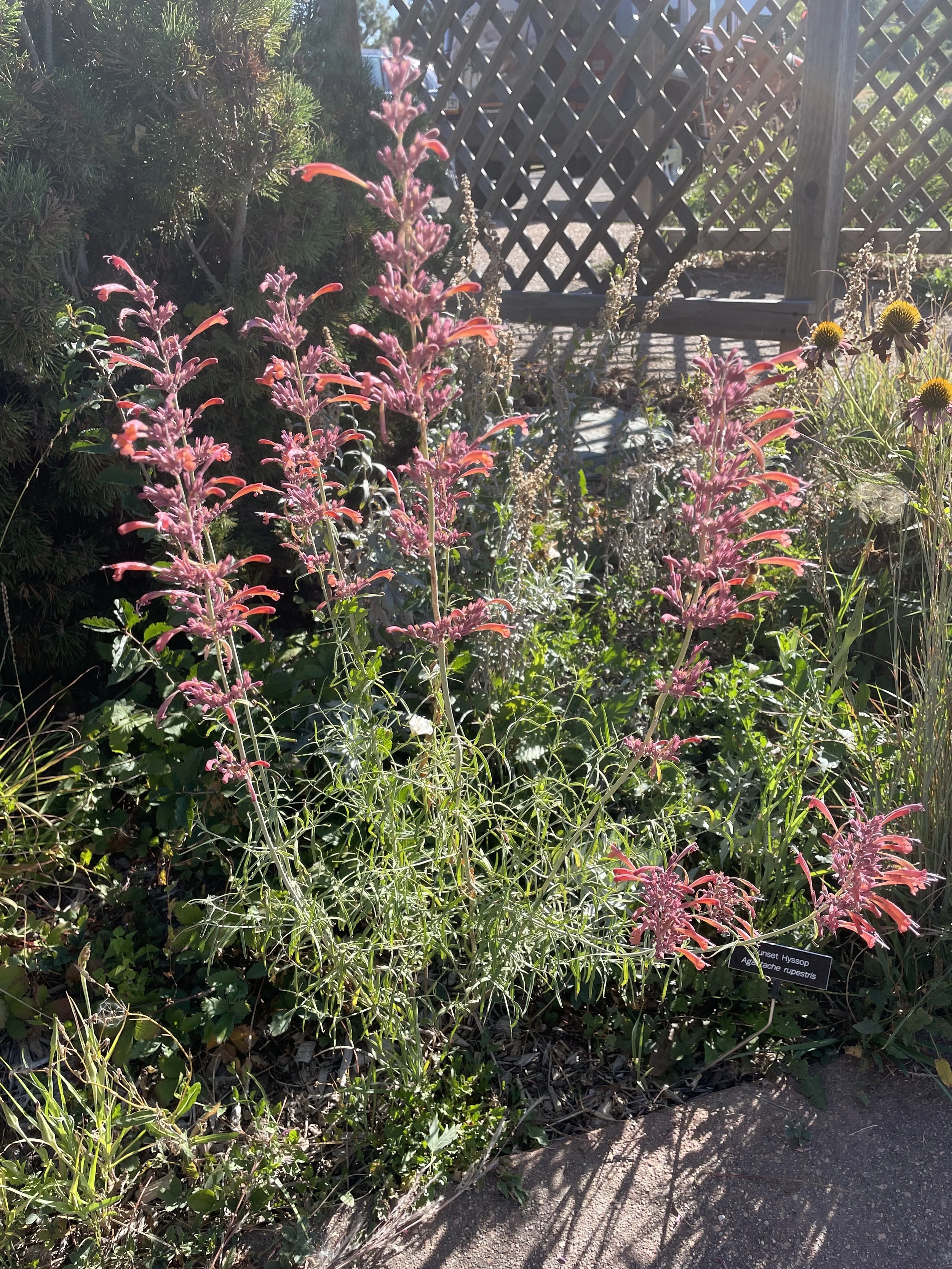
Another hummingbird attractor, Agastache Rupestris or 'hummingbird mint' is a cold hearty, drought tolerant garden star.
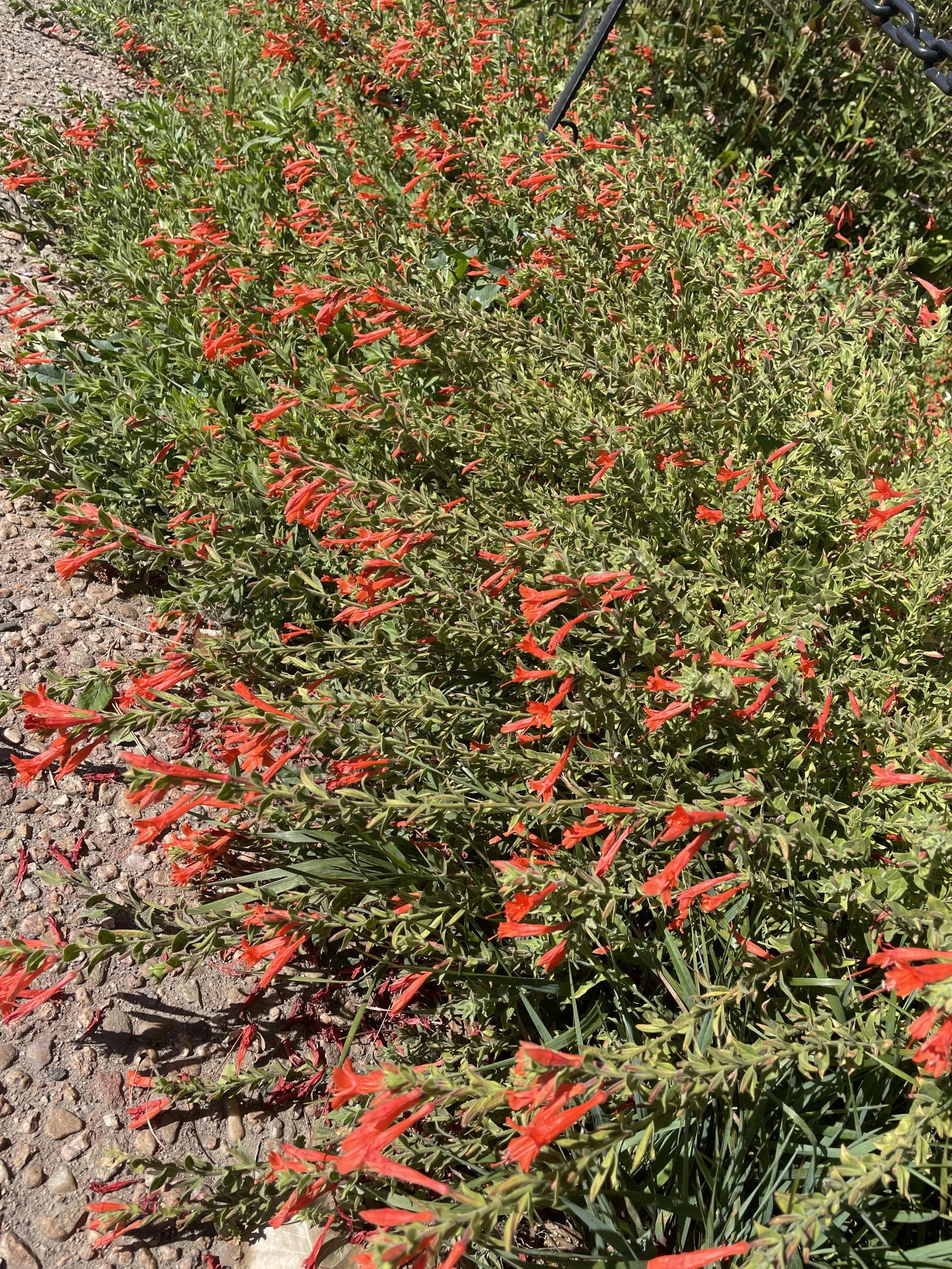
Creeping Hummingbird Trumpet (zauschneria) is a vigorous and colorful groundcover that blooms from the heat of June and then again in September. *Native to CA
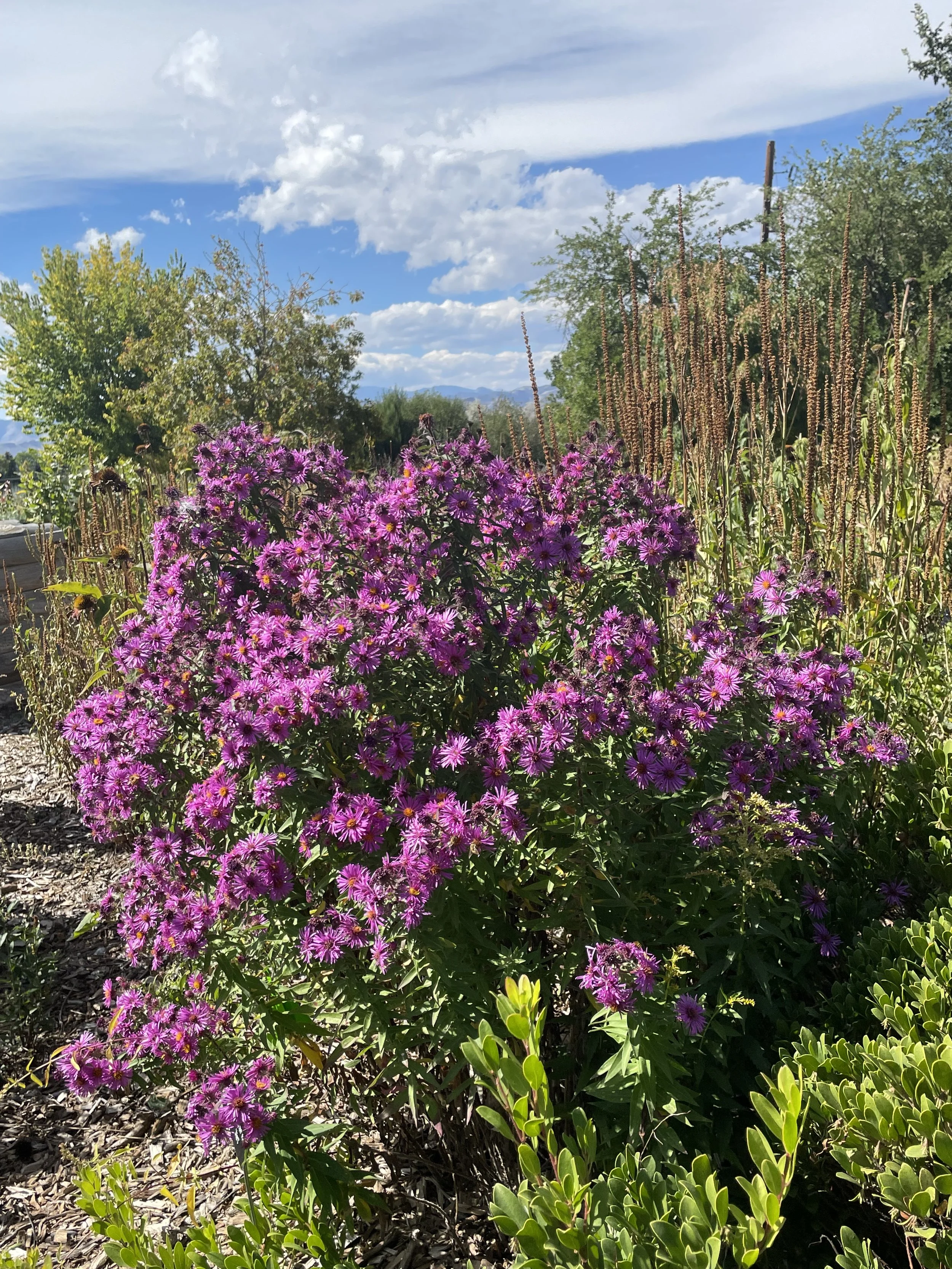
"Ruby Red" Aster is spectacular in the fall and your native pollinators will thank you. Asters and goldenrod to go well together, by the way.
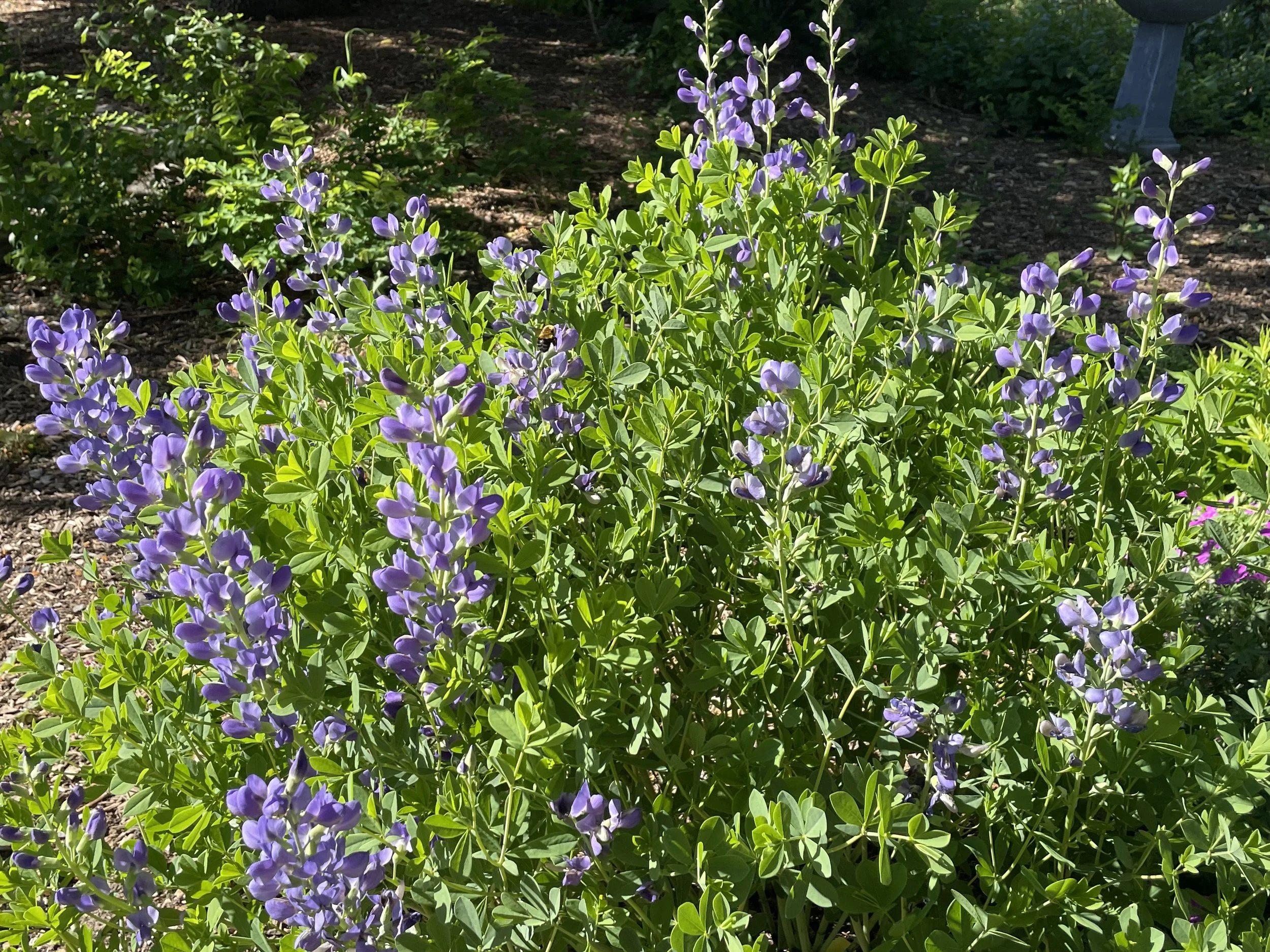
False indigo (baptisia australis) grows to nearly three feet in the summer and then dies back to the ground every year. It is in the legume family, so it is a nitrogen fixer. Hummingbirds and butterflies. love it!
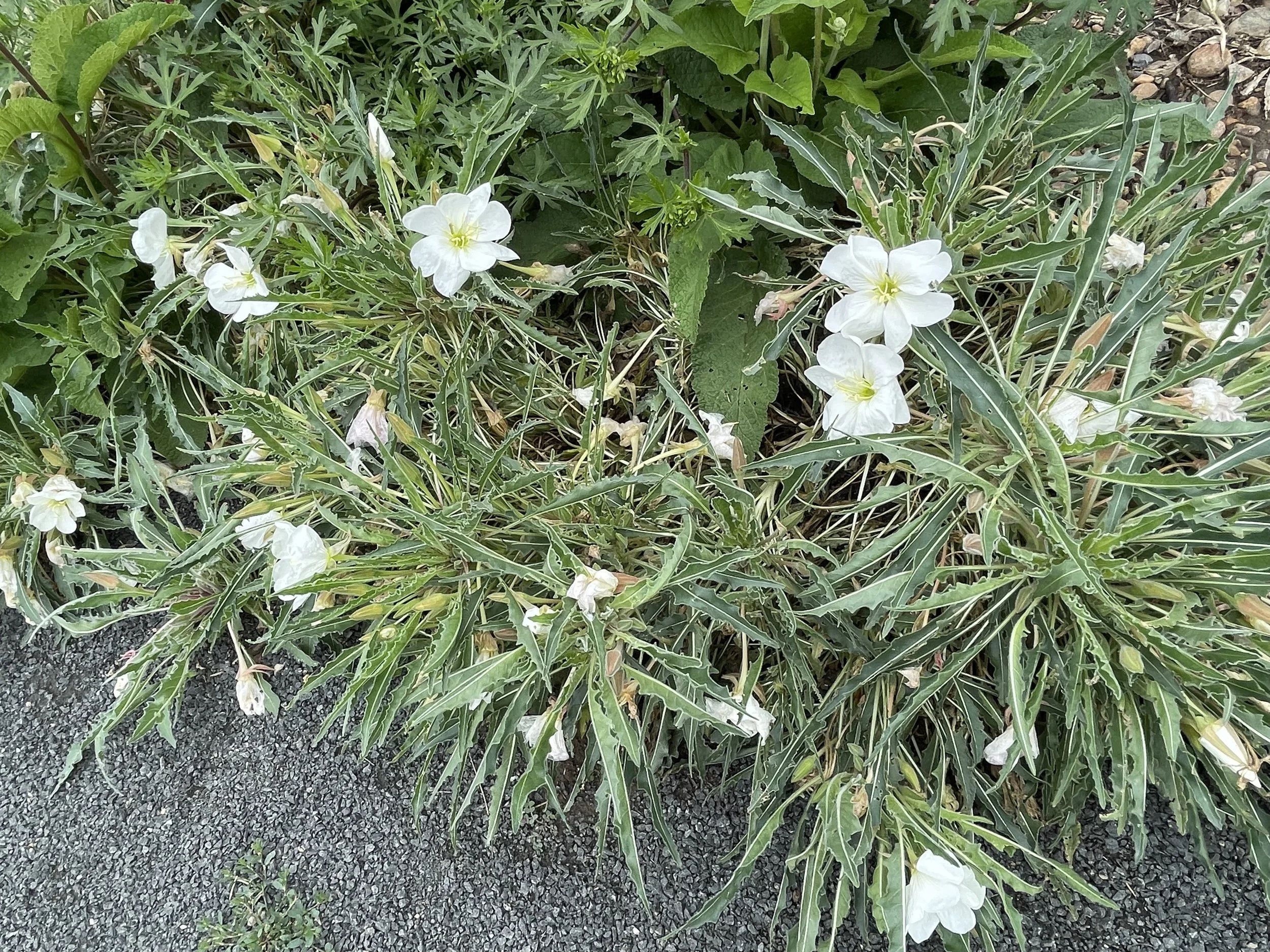
New Mexico Evening Primrose (oenothera neomexicana) is heaven scented and the drought tolerant cousin of the Missouri. Not nearly as vigorous a spreader, it adores disturbed, riparian, rocky, forest soil, and can be overwatered.
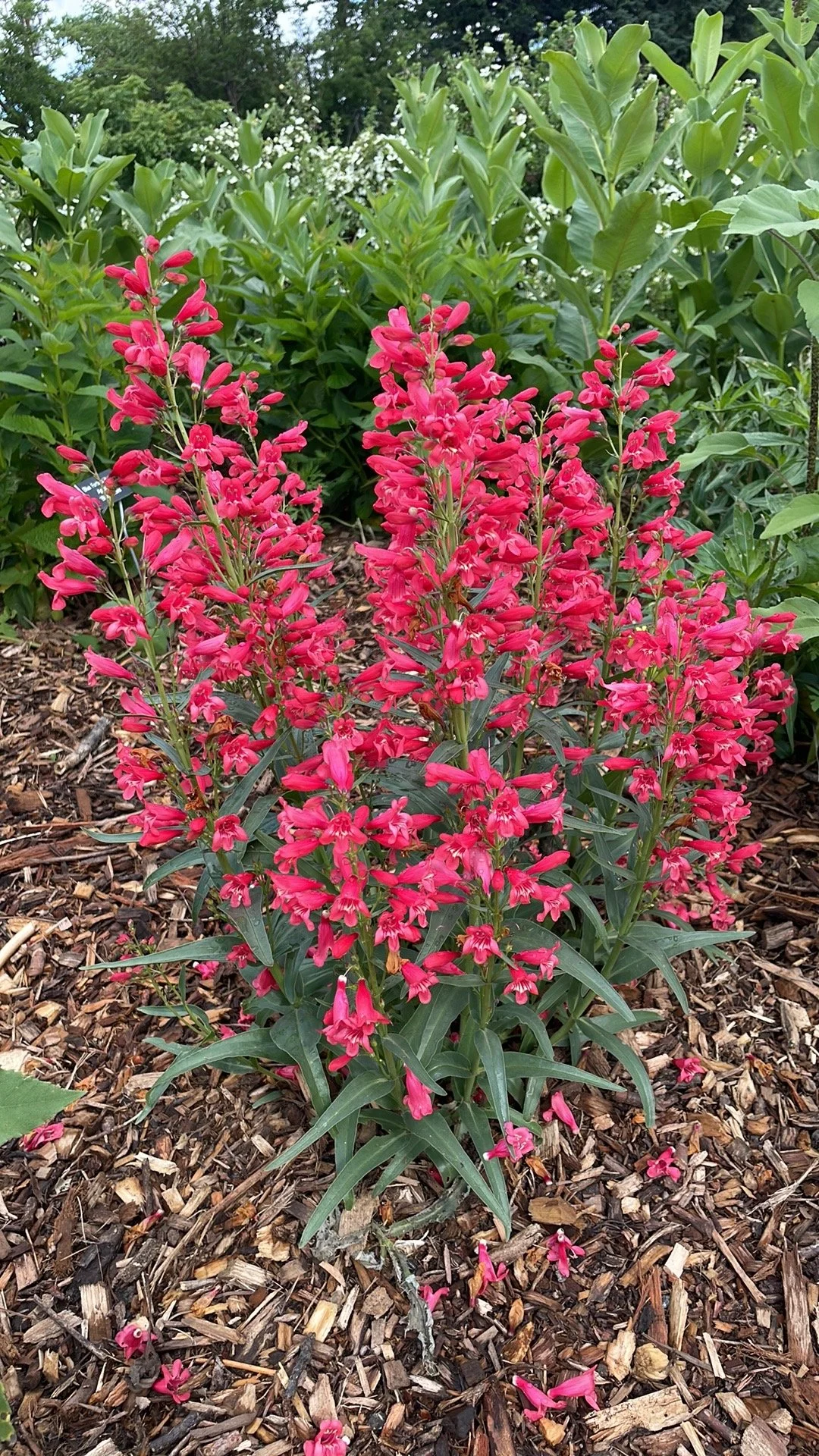
This gorgeous fire penstemon was labeled USDA zone 6, and I forgot to protect it before winter by giving it a large rock. It did not return the next year. The Nature Center is decidedly 5b.
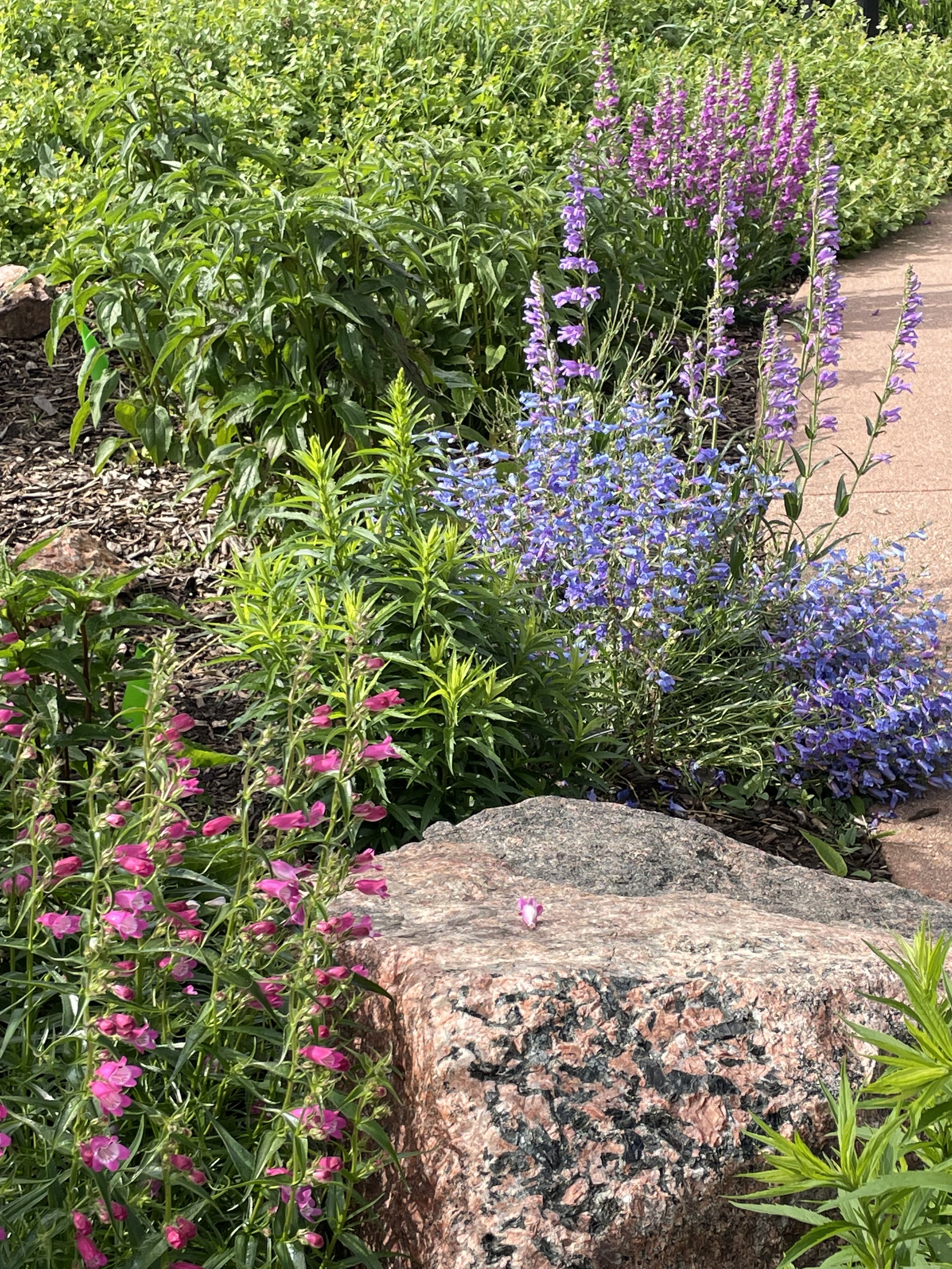
Red rocks penstemon, electric blue penstemon, and rocky mountain penstemon.
Electric blue penstemon (heterophylus) with rocky mountain penstemon (strictus) and budding echinacea. The "bee hotel" for the pollinator garden is in the background
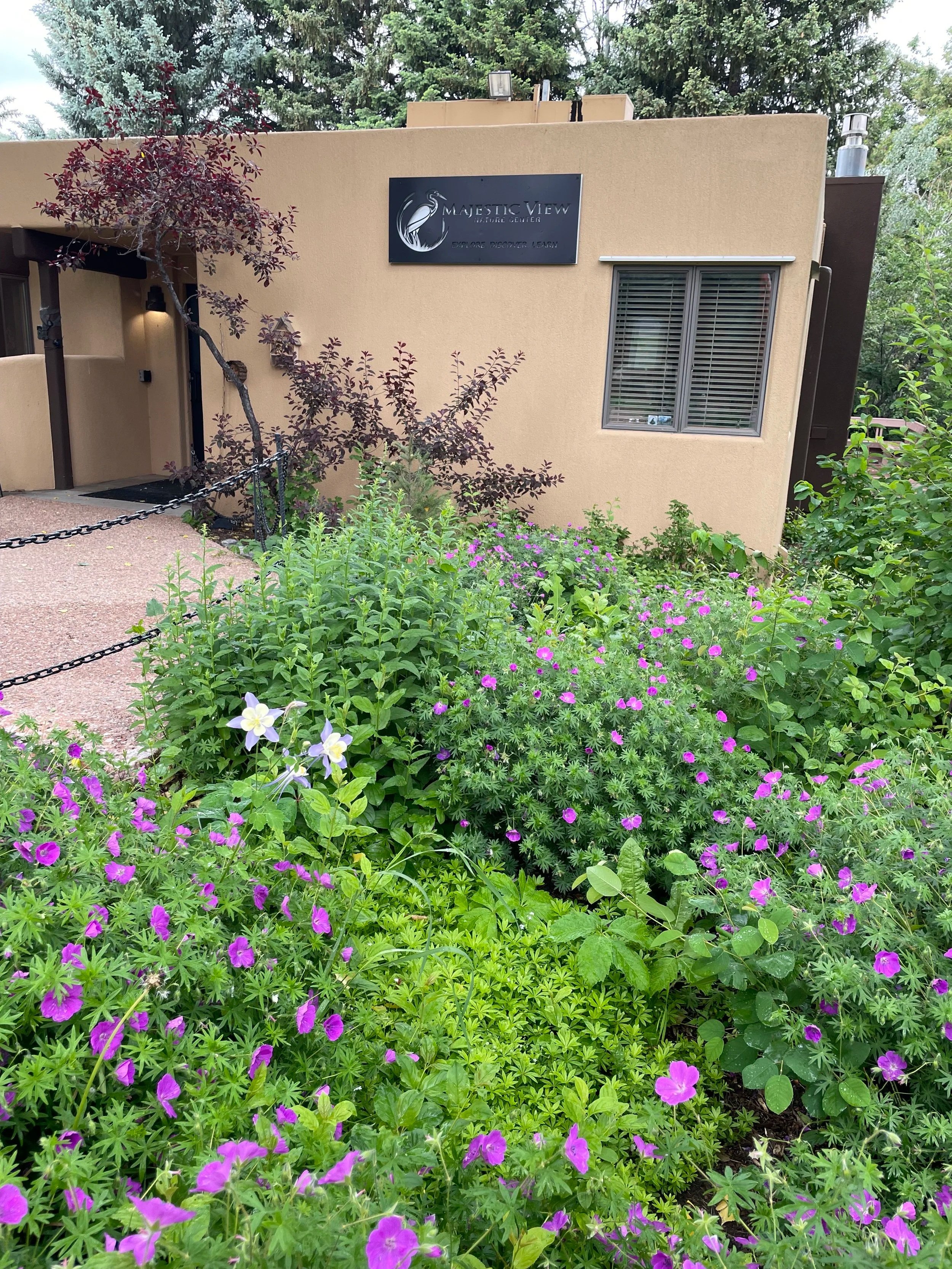
A lone columbine blooms amid competing native geranium flowers. When I arrived, we removed a lot of buckthorn, pruned the sand cherry away from the entry door, and then later the staff expanded the deck and walkway.
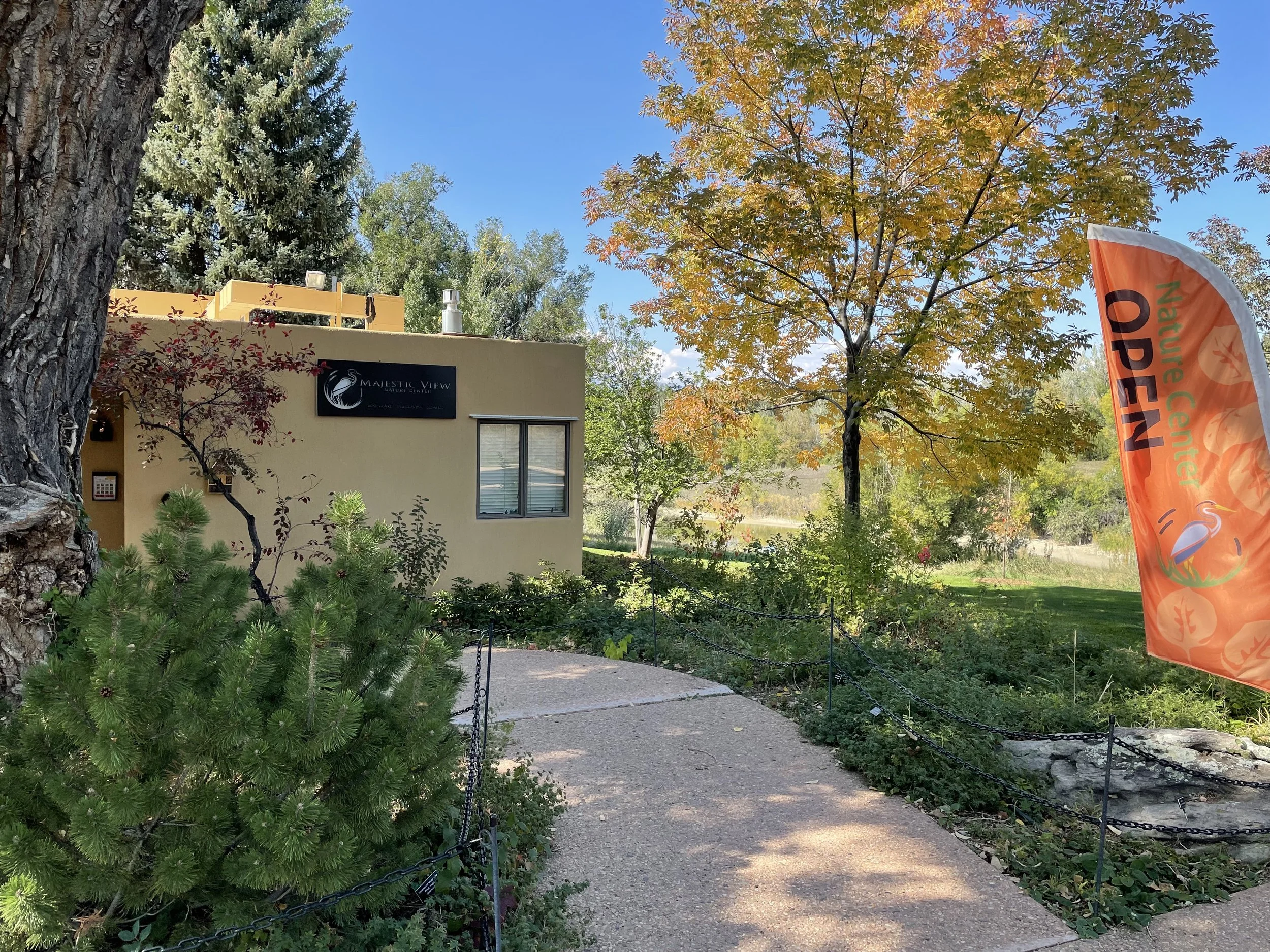
Here one can see the large weedy buckthorn has been removed down to the stump behind the corner window. The view opens up to the lawn and park behind it. An "Open" flag lets folks in the park know staff is on site.
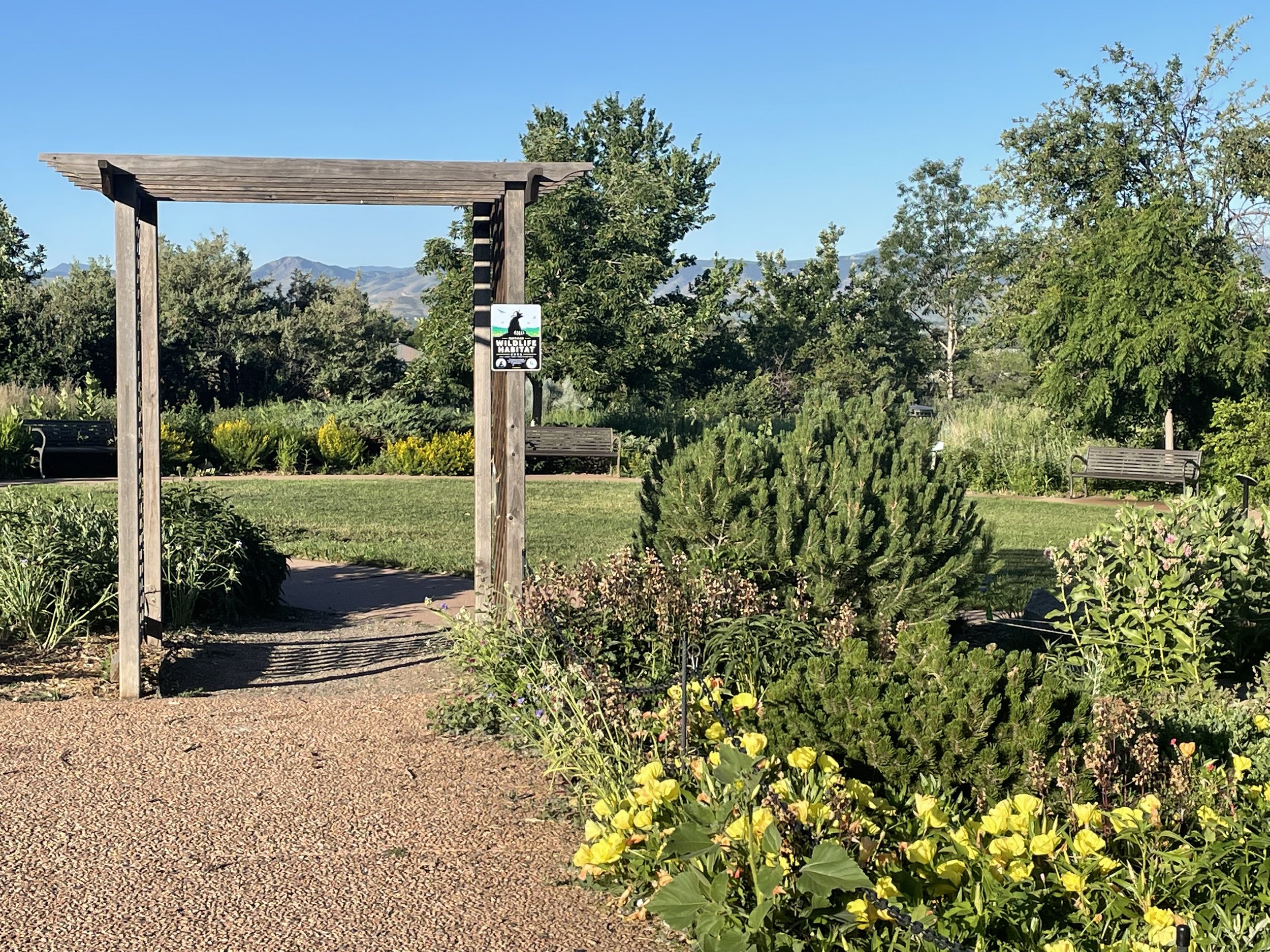
Even the view from the parking lot was "majestic" and I couldn't believe the Rocky Mountains were just in our backyard!
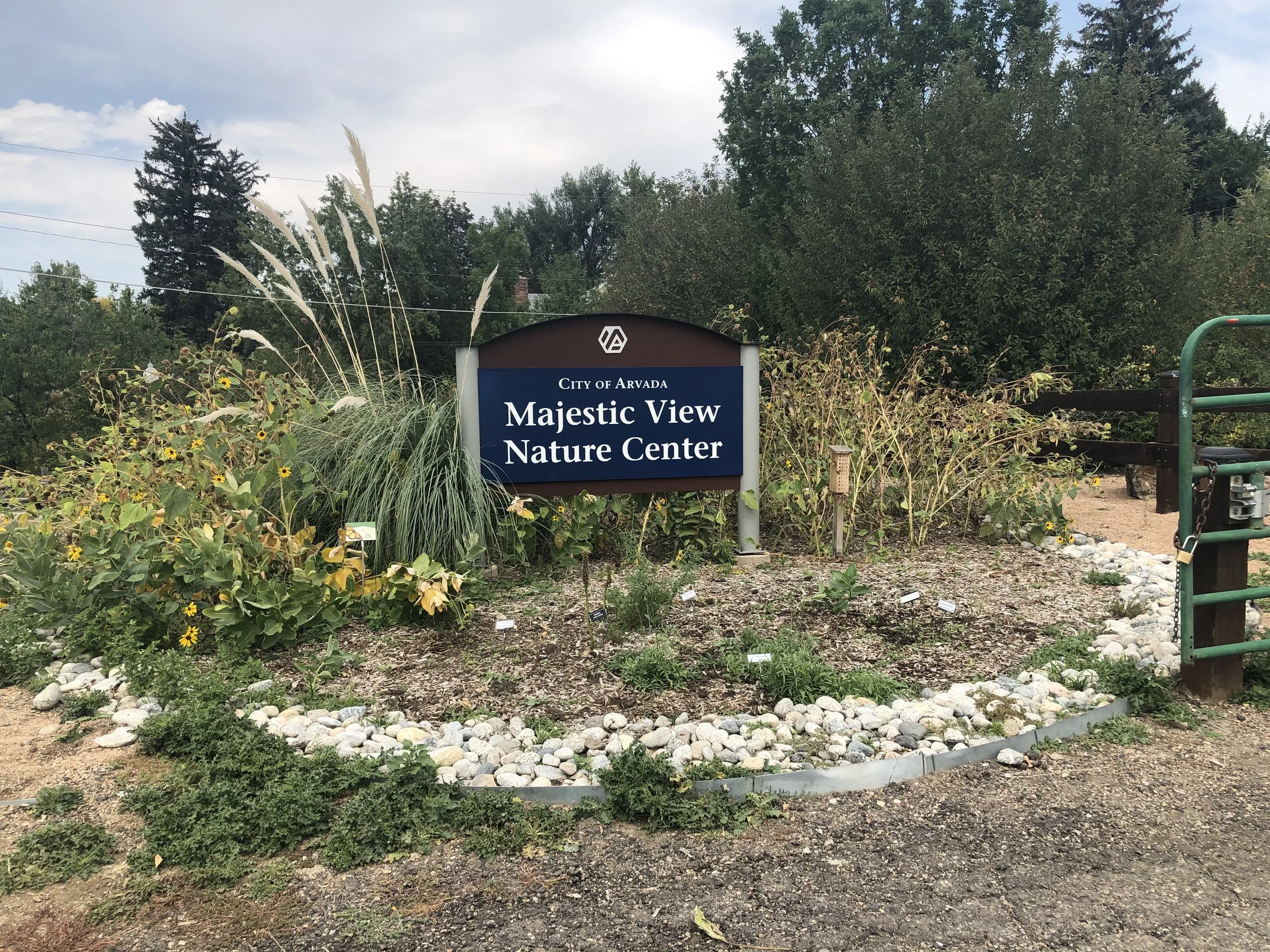
The entry was in great need of an update. The original landscaping was actually becoming buried over the years as the property is on a slope. More photos soon1